

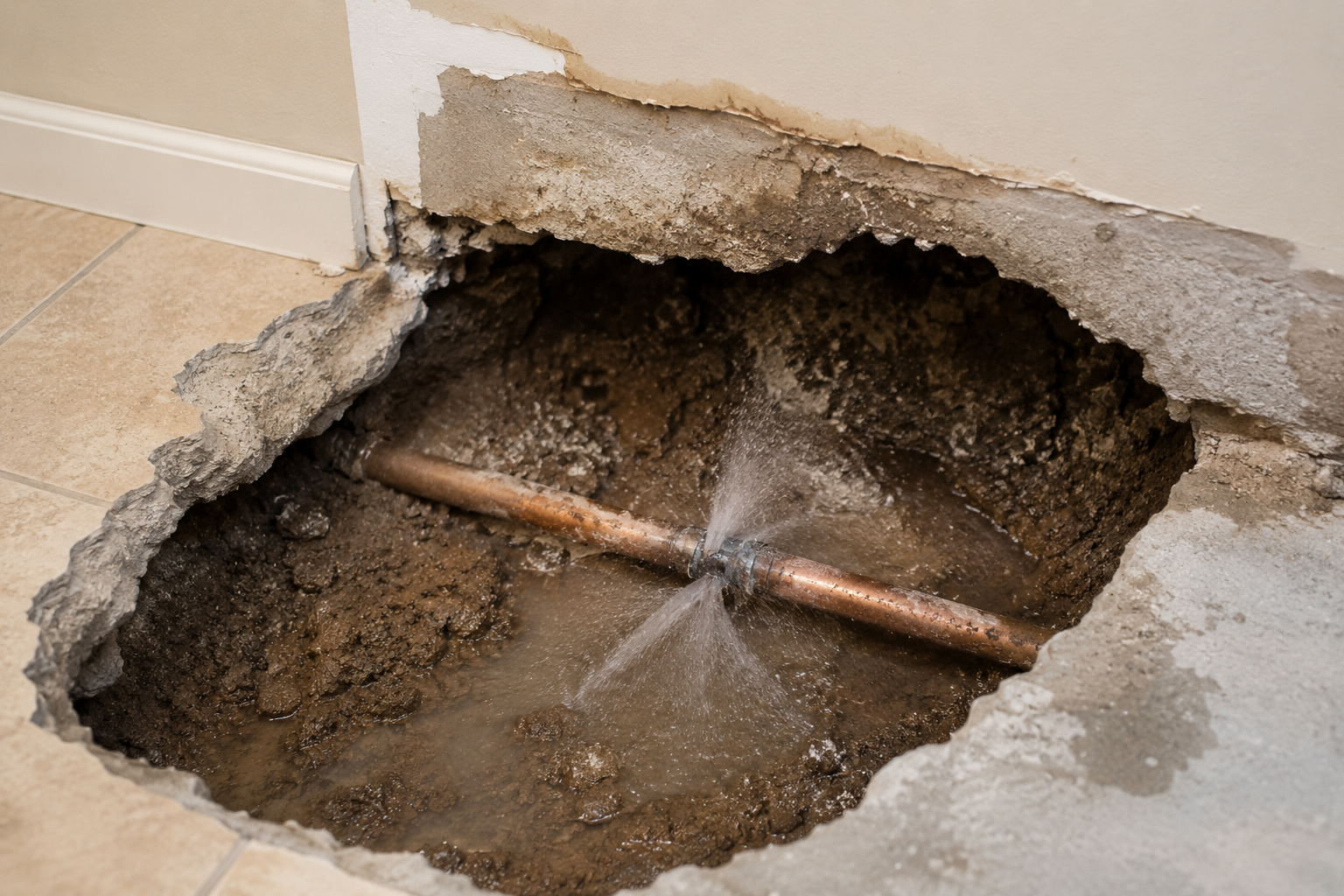
For homeowners dealing with a slab leak in Highlands Ranch, the floor often shows signs of trouble before water appears on the surface. Most people expect a puddle or stain to be the first clue, but those warnings usually come later. Floors may begin to warp, shift, or feel uneven while the leak remains hidden beneath the slab. Catching these early changes can help limit the damage and avoid more extensive repairs.
1. The Quiet Trouble Under Your Feet
Let’s keep it simple. A slab is just a thick slab of concrete with your pipes tucked underneath. When a pipe down there leaks, the water can’t climb up easily, so it spreads sideways. It soaks into the concrete. It works its way toward the bottom of your floor. Wood drinks it in. The glue under your tile starts to give. And the whole time, the surface of your floor looks completely fine. That’s the catch. You won’t see it. You’ll feel it later. Think of it as a slow leak playing the long game right under your feet.
2. Signs Your Floor Is Trying To Warn You
Your floor usually speaks up well before it gives out. Here’s what to watch for:
- A warm patch on the tile in one spot, often with hot water moving below.
- Hardwood that cups, with the plank edges curling up like a bowl.
- Laminate that puffs or separates along the seams.
- A faint musty smell on damp days that you keep blaming on the dog.
You don’t need a puddle for any of this to be real. The floor is simply trying to get your attention, the only way it knows how.
3. When Old Pipes Are The Real Story
Plenty of these leaks come back to one thing: worn-out plumbing. Copper can develop tiny pinholes. Older steel rusts from the inside until it’s thin as paper. If your home is decades old and still runs its first pipes under the slab, old pipe replacement shifts from someday to soon. Swapping aging pipe before it fails under concrete is a whole lot easier than handling it after the fact. You’re treating the cause instead of chasing the same puddle around with a towel every few weeks. That head start makes a real difference down the road.
4. Fix One Spot Or Redo The Whole Line
Once the leak turns up, you’ve got a choice. Patch the one bad spot, or replace the entire run? The answer to pipe replacement vs pipe repair comes down to the pipe’s age, the material, and how many times it has already failed. A single pinhole in a solid copper line? A spot fix works fine. A rotted stretch in a line that’s leaked twice already? Patching just buys you a little time before the next leak. A good plumber gives it to you straight and won’t push you into tearing up concrete you don’t need. If you’re unsure, it never hurts to get a second opinion first.
5. Winter Brings One More Worry
Colorado cold adds a twist. When pipes freeze, they can split and start leaking the moment they thaw out. Knowing how to thaw frozen pipes safely keeps a small freeze from turning into a real mess. A few easy rules:
- Never put an open flame near a frozen pipe.
- Warm it slowly with a hair dryer or a space heater kept at a safe distance.
- Crack open a nearby faucet so the melting water has a way out.
- Don’t force a frozen line. Give it time to loosen on its own.
Take it slow, and you’ll come out fine.
Floors don’t hide much. They cup, they warp, they go warm in strange spots, and all of it points to water going where it shouldn’t. The smart play is to treat those early signs as the real problem, because waiting only makes it grow. You don’t have to be a plumber to stay ahead of it. You just have to pay attention to what your home is telling you. Catch the leak while it’s still small, and your floor and your home both come through it just fine. A little attention now goes a very long way.
“Floor feeling off? Let Doyle Plumbing find the leak before it wrecks your subfloor. Call now at 720-638-8839, and we’ll take care of the rest.”
FAQs
Q1. How fast can a leak under the floor damage a home in Highlands Ranch?
Faster than most folks expect. In Highlands Ranch, water under the concrete can reach your flooring within a few days, cupping wood and loosening tile before any stain appears. The dry air above keeps it hidden while it spreads underneath.
Q2. Does the climate in Highlands Ranch make a slab leak harder to detect?
Yes. The dry climate and frequent temperature swings in Highlands Ranch can make a slab leak harder to spot. Surface moisture may dry quickly while water continues spreading beneath the concrete, delaying visible signs of damage.
Q3. When should a Highlands Ranch homeowner call a plumber about a warm floor?
Right away. A warm spot on tile in a Highlands Ranch home usually means hot water escaping under the slab, and an early check beats waiting for real harm. The sooner it’s found, the easier the fix.